Aromatherapy is one of the most established complementary therapies in the UK, and interest in it as both a practice and a career continues to grow. If you are drawn to the therapeutic use of essential oils, enjoy working with people, and want a career that is both creative and clinically grounded, training as an aromatherapist could be the right path for you. This guide walks through what aromatherapy actually involves at a professional level, what qualifications you need, who the training is suitable for, and what a career in the field can look like once you are qualified.
What does a professional aromatherapist do?
Professional aromatherapists do considerably more than select pleasant-smelling oils. The work is rooted in a solid understanding of essential oil chemistry, botanical origins, the physiology of how oils interact with the body, and the clinical reasoning needed to tailor treatments safely and effectively to individual clients.
In practice, an aromatherapist will conduct a thorough client consultation, take a detailed case history, assess any contraindications, and then design a bespoke treatment plan using carefully selected and blended essential oils. Treatments are typically delivered through aromatherapy massage, though the discipline also covers inhalation, compresses, baths, and the creation of topical preparations. A skilled aromatherapist adapts their approach to the individual, taking into account physical, emotional and lifestyle factors. This level of personalisation is what distinguishes a qualified practitioner from someone with an interest in oils at a consumer level.
Is aromatherapy regulated in the UK?
Like most complementary therapies in the UK, aromatherapy is currently an unregulated profession, meaning there is no legal requirement to hold a specific qualification before practising. However, without a recognised, accredited qualification you will not be able to obtain professional insurance, join an industry body, or credibly and ethically hold yourself out as a qualified practitioner. In real terms, the qualification is non-negotiable if you intend to work professionally.
The principal professional body for aromatherapists in the UK is the International Federation of Aromatherapists (IFA). IFA-awarded qualifications are widely recognised by insurers, employers and professional registers, and IFA practitioners are specifically referenced by the Government Department of Health and the General Medical Council, who advise doctors to refer patients to practitioners on PSA Accredited Registers. The IFA is also recommended by the UK National Careers Office as the body of choice for aromatherapists throughout their career.
What qualification do you need to practise as an aromatherapist?
The standard entry-level professional qualification in the UK is a Level 3 diploma in aromatherapy, though higher-level qualifications provide a considerably deeper and more comprehensive education. Our own offering is the IFA Level 5 Diploma in Aromatherapy, which sits at a significantly more advanced standard and equips graduates with the depth of knowledge and clinical skill expected by the profession today.
Level 5 is not an entry barrier that should put you off. The course is open to complete beginners, and you do not need prior experience in aromatherapy to enrol. What it does mean is that the education you receive is substantially richer than a lower-level programme, covering the science and botany of essential oils, their chemistry, therapeutic application, blending, pathology, client consultation skills and clinical case study work to a depth that genuinely prepares you for professional practice.
Do you need prior qualifications to enrol?
It depends on your background, but there is a clear route for everyone.
If you already hold a UK-regulated qualification in any of the following areas, gained within the last four years, you can typically enrol directly onto the IFA Level 5 Diploma: a Level 3 or above Diploma in Massage, a Certificate or Diploma in Anatomy, Physiology and Pathology at Level 3 or above, a Level 3 qualification in Reflexology, or completion of our Aromatherapy Access Course.
If you are a complete beginner with no previous study in massage or anatomy and physiology, you will need to cover those subject areas alongside the aromatherapy units. This is achieved through our Aromatherapy Access Course, which runs concurrently and ensures you have the foundational knowledge required. Our ITEC Level 3 Certificate in Anatomy, Physiology and Pathology is also available as a standalone route into this, and is the widely recognised theoretical foundation for almost all complementary therapy qualifications. If you would like to understand more about why that subject area matters so much, our guide on why anatomy and physiology is essential for therapists explains it in depth.
We are always happy to discuss your individual situation and advise on the most sensible entry point. If you are uncertain, please get in touch before enrolling.
What does the training actually cover?
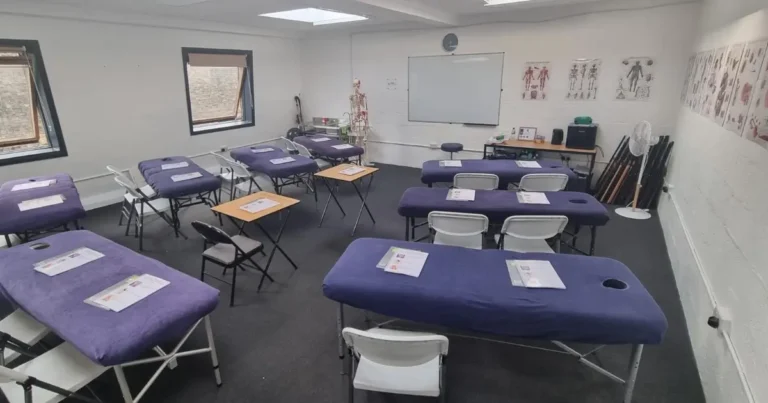
Our IFA Level 5 Diploma in Aromatherapy is a nine-month programme delivered through a blended learning model, combining in-person practical sessions at our Battersea, London training centre with live online theory sessions via Zoom. This structure makes the course accessible to people who are working or have other commitments, without compromising the depth or quality of what is taught.
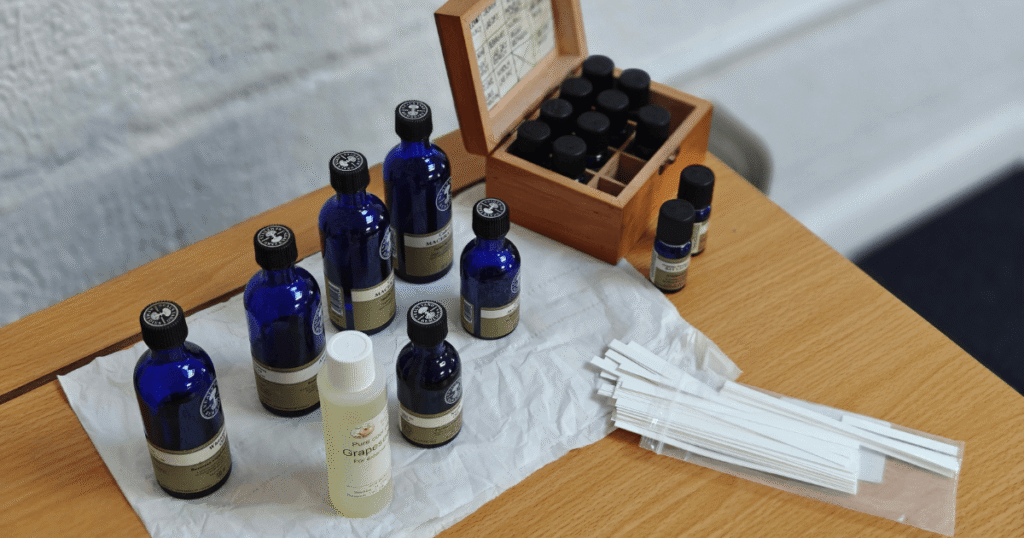
Over the course of the nine months, students explore the properties and therapeutic benefits of over 65 essential oils in depth, learning to identify them by aroma, understand their chemistry, trace their botanical origins and apply them safely and effectively in clinical practice. The curriculum covers aromatherapy massage techniques, the various methods of essential oil application, the science of blending, carrier oils and hydrolats, safety and contraindications, client consultation and treatment planning, and the management of common health conditions through aromatherapy.
There is also a creative and more personal dimension to the training. Students learn to make handmade aromatherapy products, including creams and lip balms, explore the concept of subtle aromatherapy and its connection to the energetic body, and develop their olfactory skills, training their sense of smell to distinguish aromatic notes with precision.
Sustainability is woven into the programme too. Understanding the ethical sourcing of essential oils and the environmental impact of production is increasingly important for conscientious practitioners, and the course addresses this directly.
The Kew Gardens visit and lavender farm trip
One of the genuinely distinctive elements of our aromatherapy diploma is the field trip to Kew Gardens, which is included as part of the course. Students spend a day exploring the world’s most renowned botanical collection with a guided focus on the plants behind the essential oils they are studying. Connecting the aromatic extracts you work with back to their living plant sources makes a real difference to how that knowledge is understood and retained.
There is also an optional visit to a lavender farm, giving students the chance to see large-scale cultivation and production of one of the most widely used aromatherapy plants firsthand. These are the kinds of experiences that set this course apart from purely classroom-based study.
How is the course assessed?
The IFA Level 5 Diploma involves three formal examinations: a two-hour Aromatherapy Theory and Massage paper, a one-hour Anatomy and Physiology paper (which students with an existing approved A&P qualification may be exempt from), and a three-hour Practical Assessment that includes a massage sequence, an interview and a review of coursework.
Before sitting the external IFA examinations, students must also have completed the course’s compulsory assignments and passed internal mock examinations set by the tutor, as well as maintaining at least 80% attendance. The assignment requirements are substantial and reflect the professional standard of the qualification. They include a set of 60 individual case study treatments with client evaluations and reflective practice, a 2,500-word research paper, and a reflective practice portfolio. These are not tick-box exercises; they are designed to build real clinical confidence and demonstrate genuine competency.
What can you do once you are qualified?
IFA-qualified aromatherapists have a strong foundation for a variety of career paths. Many go on to build private client practices, either working from a dedicated treatment room at home or renting space in a clinic or wellness centre. Others work within spas, salons, health clubs and holistic health practices, and some build mobile therapy businesses that allow them to visit clients directly.
Because IFA practitioners are included on a PSA Accredited Register, there is also a pathway into more formal healthcare settings. IFA registrants are referenced for NHS employment opportunities, and the organisation provides practical support for practitioners looking to introduce themselves to GP surgeries and local healthcare communities, including sample CV templates, credential descriptions, and GP introduction letters.
Aromatherapy also combines naturally with other complementary therapy qualifications. Many therapists who train in reflexology or massage find that aromatherapy deepens and broadens their offer, allowing them to create more personalised and layered treatment experiences for clients. If you are already a qualified massage therapist exploring ways to develop your practice, aromatherapy is a particularly complementary addition.
Is aromatherapy training suitable as a career change?
Absolutely, and it is perhaps one of the better-suited complementary therapy disciplines for career changers specifically. The nine-month duration, blended learning format and weekend delivery model mean that most people can train without giving up their existing income. The investment of time and effort is real, particularly around the case study and assignment requirements, but the structure of the programme is deliberately designed to accommodate people with full lives outside of their studies.
We also find that people coming from other professional backgrounds often bring valuable transferable skills into aromatherapy practice, whether that is the ability to consult and communicate effectively with clients, an existing understanding of health and wellbeing, or simply a methodical approach to learning complex material.
If you are interested in a broader look at the therapy training landscape and how aromatherapy fits into it, our guide to the best massage courses for beginners and our post on why it is worth becoming a qualified therapist may both be useful reading alongside this one.
Why train with us?
At The School of Natural Therapies, we have been educating therapists since 1989. Our IFA Level 5 Diploma in Aromatherapy is taught by an experienced specialist tutor and delivered in small class groups, which means students receive individual attention and genuine support throughout the nine months. Course fees include comprehensive course notes exclusive to us, all equipment and oils used during classroom practical sessions, access to discounted essential oils and carrier oils from our supplier for home study, and the Kew Gardens visit.
We are accredited by the International Federation of Aromatherapists and are part of a wider set of professional affiliations that reflect our commitment to training to the highest standards. We are based in Battersea, London, and all practical sessions take place at our training centre, which is easily accessible by public transport.
If you would like to find out more, or want to talk through whether this course is the right fit for your background and goals, we would be glad to hear from you. Contact us directly, or visit the IFA Level 5 Diploma in Aromatherapy course page for full details, dates and how to enrol.