Deciding to train as an aromatherapist is one thing. Knowing what the experience will actually be like, week to week, is quite another. People who are seriously considering enrolment often have very practical questions that a course overview page cannot fully answer. What are the classes like? How does blended learning actually work in practice? What is the case study workload really like? What happens in the exams? And what does a typical weekend in the training room feel like?
This post is intended to answer those questions honestly and in detail, based on what students on our IFA Level 5 Diploma in Aromatherapy actually experience across the nine months of training.
First, a word on level and depth
Our aromatherapy diploma sits at Level 5, which is equivalent in standard to the first year of an undergraduate degree. It is worth saying this upfront because it shapes what the training feels like from the inside. This is not a short introductory course or a weekend workshop in essential oils. It is a serious, thorough, professionally oriented programme that expects genuine engagement from students across a sustained period of time.
That said, it is open to complete beginners. You do not need to arrive with any prior knowledge of essential oils, aromatherapy, or massage. What the Level 5 standard means in practice is that the education you receive goes considerably deeper than a lower-level qualification would, covering the chemistry and botany of essential oils, the science of how they interact with the body, and the clinical reasoning that underpins safe, effective and personalised treatment. Students who come in expecting a relaxed hobby course are sometimes surprised by the intellectual rigour involved. Students who arrive with a genuine desire to practise professionally find that the depth is exactly what they needed.
How the nine months are structured
The course runs over nine months and uses a blended learning model. In straightforward terms, this means some sessions take place in person at our Battersea, London training centre, and others take place online via live, interactive Zoom classes. The two types of session serve different purposes, and understanding which is which helps you plan your time.
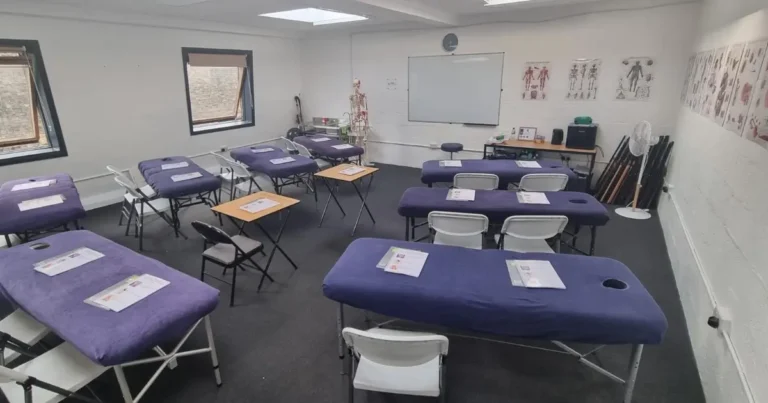
Practical sessions, including aromatherapy massage, blending work, product making and hands-on clinical practice, are delivered in person at the training centre. These are typically held on Saturday mornings. Being physically present for this kind of work is essential; you cannot learn to apply essential oils therapeutically, calibrate your blending instincts, or develop your massage technique through a screen.
Theory sessions, covering subjects such as essential oil science, chemistry, botany, pathology, safety and contraindications, are delivered online via Zoom on Sunday mornings. These live sessions are interactive rather than pre-recorded lectures, meaning you can ask questions, contribute to discussions and engage with your tutor in real time. Sessions are also recorded, so if you are occasionally unable to attend live, you can revisit the material. This is one of the aspects of the blended model that students consistently find helpful, particularly those balancing the course alongside work or family commitments.
Each month of the nine-month programme follows a similar rhythm of one in-person practical Saturday and one online theory Sunday, with home study work and case study treatments woven in throughout. The pacing is designed to be manageable rather than overwhelming, but it does require consistent effort. Treating it as something you dip in and out of when convenient will make the workload harder, not easier. Students who set aside regular time each week for home study and case study practice tend to find the nine months genuinely enjoyable rather than a sprint to the finish.
What the practical sessions feel like
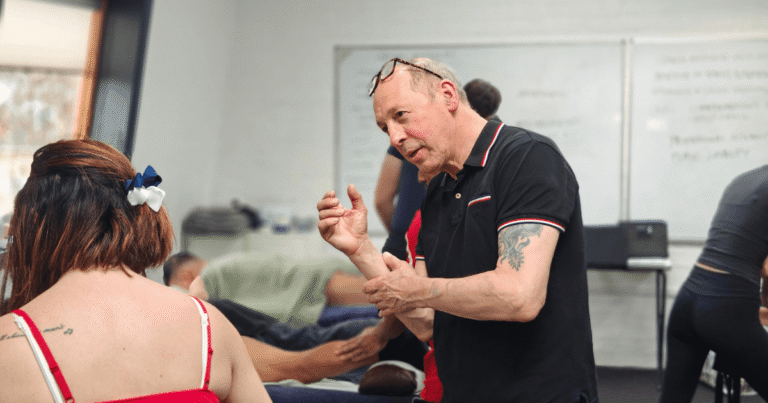
The in-person days are where the training comes alive in the most tangible sense. Classes are kept deliberately small, which means you receive individual attention from your tutor and have room to ask questions, practise techniques repeatedly and develop at your own pace without feeling lost in a crowd.
Early in the course, practical sessions focus on establishing the foundations of aromatherapy massage, including correct technique, body mechanics, safe oil application and client communication. As the course progresses, sessions become more clinically complex. You will learn to adapt your treatments for different client presentations, work with blends tailored to specific conditions, and build the kind of treatment planning fluency that comes from repeated, supervised practice.
Practical days also include blending workshops, where you develop your ability to create synergistic essential oil combinations with intention and precision. This is one of the more creative dimensions of the training, and many students find it among the most absorbing. Learning to blend well is a skill that develops gradually, and the supervised in-class environment gives you the feedback needed to refine it.
Product making sessions, in which students create handmade aromatherapy preparations such as creams and lip balms, sit alongside the massage and blending work. These sessions have a slightly different character – more experimental, often light-hearted – and are a reminder that aromatherapy has a depth and range of application that extends well beyond the treatment couch.
Developing your sense of smell
One aspect of aromatherapy training that surprises many students is how much deliberate attention is given to olfactory development – the training of your sense of smell. Over the course of the nine months, you will work systematically with more than 65 individual essential oils, learning to identify them by aroma, distinguish their aromatic notes, and understand the relationship between a plant’s chemistry and the scent it produces.
For most people, this is a genuinely new skill. We tend not to pay much conscious attention to our sense of smell in everyday life, and developing it into a reliable professional tool takes practice. Students are encouraged to work with their oils between sessions, building familiarity through repetition. By the latter months of the course, identifying oils by scent alone, and understanding intuitively why certain combinations work and others do not, becomes second nature for most students. It is one of the quieter but more rewarding dimensions of the training.
The Kew Gardens visit
Included within the course is a guided visit to Kew Gardens, which takes place as a scheduled study day. The purpose of this visit is to connect the botanical knowledge covered in class to living plant material at the world’s most renowned botanical collection. For a discipline rooted in plant science, spending time among the actual sources of the oils you work with every day is a genuinely valuable experience.
Students often describe the Kew visit as one of the highlights of the nine months, not just for the obvious beauty of the gardens but for the way it consolidates learning that can otherwise remain abstract. When you have stood in front of a frankincense tree or examined a ylang ylang flower up close, the oils derived from those plants become something more concrete. There is also an optional lavender farm visit later in the course, which gives students the chance to see cultivation and distillation in practice.
The case study workload
The case study requirement is substantial, and it is worth being fully clear about this before you enrol. Students are required to complete 60 individual treatments as part of their coursework, made up of 6 clients each receiving 6 individual massage treatments (36 treatments in total), plus 24 further treatments applying aromatherapy formulations through other methods of application. Up to 9 of the total case studies may use application methods other than massage.
Each case study requires written evaluations and reflective practice notes, not simply a record that a treatment took place. This is where a significant proportion of the home study time goes. The case studies are not a bureaucratic hoop to jump through; they are the mechanism through which you build real clinical fluency, learn to adapt your practice to individual clients, and develop the reflective habits that good therapists maintain throughout their careers.
In practical terms, most students recruit their case study clients from among family, friends and colleagues. People are generally very willing to receive a series of professional aromatherapy treatments at no charge, and the relationships you build through your case study work often become the seed of your early client base once you are qualified. Starting to think about who your case study clients might be before the course begins is a sensible step.
The research paper and reflective portfolio
Alongside the case studies, students are required to produce a 2,500-word research paper and a reflective practice portfolio. The research paper asks you to engage critically with clinical research on aromatherapy, review evidence from books, journals and electronic databases, and evaluate what you find. It is an academic piece of writing, and for students who have not written in that register for some time, it can feel unfamiliar at first. Tutor support is available throughout, and the assignment is introduced progressively rather than dropped on you without preparation.
The reflective portfolio is a different kind of document. It asks you to evaluate your own practice honestly, consider the scope and limits of what you can offer, and demonstrate awareness of your ongoing professional development. It is a more personal piece of work, and many students find it genuinely useful as a way of taking stock of how much they have developed over the nine months.
What happens before the exams
Before any student is entered for the external IFA examinations, all compulsory coursework and assignments must be fully completed and submitted. Students must also have passed internal mock examinations set by the tutor, and must have maintained at least an 80% attendance record across the course. These are not arbitrary conditions; they are there to ensure that every student sitting the final exams is genuinely prepared to pass them.
The mock examination process is one of the more reassuring aspects of the programme for students who are anxious about exams. By the time you sit the external papers, you will have already practised under exam conditions, received feedback on your performance, and had the opportunity to address any gaps. Students who engage seriously with the mocks very rarely find the real exams a shock.
The examinations themselves
There are three formal assessments for the IFA Level 5 Diploma. The first is a two-hour written theory paper covering aromatherapy and massage. The second is a one-hour Anatomy and Physiology theory paper, though students who hold an existing, approved A&P qualification may be exempt from this element. The third, and most significant, is a three-hour Practical Assessment, which includes performing a massage sequence, a structured interview with the examiner, and a review of coursework.
The practical exam is the one that tends to feel most daunting in prospect, and the most satisfying in retrospect. By exam day, the techniques, consultation approach and treatment planning skills you have been building across nine months should feel entirely natural. Students who have completed their case studies thoroughly and attended practical sessions consistently tend to find that exam day feels less like a test and more like a demonstration of something they have genuinely become good at.
Students with an existing, UK-regulated and approved A&P qualification at Level 3 or above may be exempt from sitting the A&P examination paper. If this applies to you, it is worth discussing with us before enrolling so the appropriate exemption can be confirmed. If you are interested in what the A&P component involves, our guide to studying anatomy, physiology and pathology covers the subject area in detail.
What the learning environment is like
Small class sizes mean that the atmosphere on practical days is close-knit rather than anonymous. Students in a given intake tend to support one another naturally through the nine months, sharing case study experiences, practising on each other between sessions, and building friendships that often continue well beyond graduation. This is a common feature of immersive vocational training, and it is something our students frequently mention in their feedback.
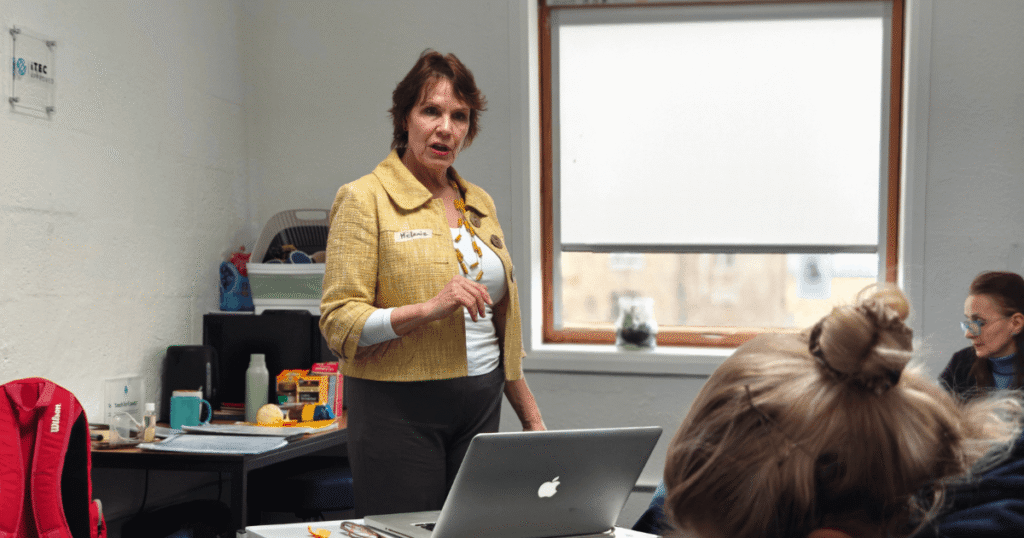
The online theory sessions have a slightly different dynamic. Live Zoom classes with a small group and an experienced tutor are more like a seminar than a lecture, and the interactive format means the pace can flex around what students are finding challenging. Sessions are recorded, but attending live is encouraged both for the quality of the experience and because real-time questions from fellow students often cover things you did not realise you needed to ask.
Is it manageable alongside work?
Yes, for most people – though it requires honest commitment. The blended learning format is specifically designed to accommodate people who cannot give up their income to train full-time. The in-person practical sessions and online theory days are held at weekends, and the weekday evenings remain your own. The real demand on your time comes from case study work, home practice with your oils, and assignment writing, all of which needs to be spread across the week rather than left until the night before a session.
Students who manage the nine months most comfortably tend to be those who treat the home study element with the same seriousness as the classroom sessions. If you have a busy professional life, planning when and how you will fit the case study work in before the course begins, rather than discovering the challenge mid-programme, makes a significant difference.
Who is this course for?
The IFA Level 5 Diploma attracts a genuinely varied group of people. Some students are complete beginners who have been drawn to aromatherapy and want a professional qualification. Others are already working as massage therapists who want to incorporate essential oils into their practice in a properly trained and insured way. Some have an existing qualification in reflexology or holistic therapies and are expanding their skillset. Others are career changers who want something more hands-on and people-centred than their current work.
What tends to unite people on the course is a genuine interest in both the science and the art of what they are learning, an enjoyment of working with people, and a desire to practise to a professional standard rather than simply pick up a basic certificate. If that sounds like you, it is likely the right environment.
If you are exploring complementary therapy more broadly and want to understand how the different disciplines relate to each other and to your existing qualifications, our guide to becoming an aromatherapist in the UK covers the career landscape in full, and our overview of qualifications needed to become a massage therapist may also be useful if you are weighing up different training routes.
Ready to find out more?
If this post has answered your practical questions and you are ready to take the next step, the IFA Level 5 Diploma in Aromatherapy course page has full details on dates, entry requirements, what is included in the course fees, and how to enrol. If you have specific questions about whether the course is right for your background or circumstances, we are always happy to talk them through. Get in touch with us directly and we will do our best to help.