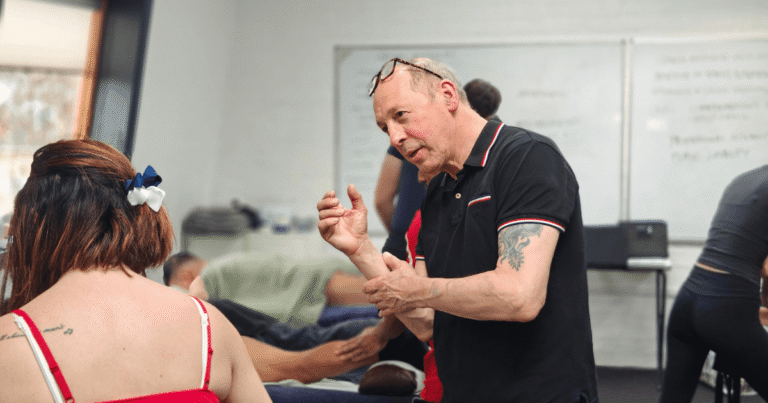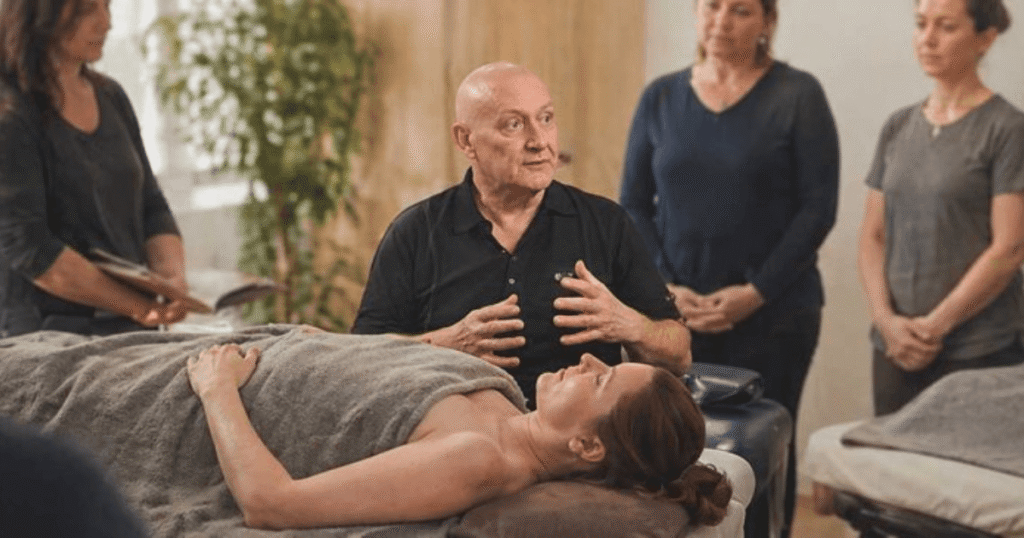
We’re delighted to share that we were featured in the STACC Spring 2026 Newsletter, published by the Standards Authority for Touch and Cancer Care.
Our Principal, Marc Innes, sits on the STACC Advisory Board, so it’s always a particular pleasure to be mentioned in their communications. The excerpt highlighted an article he co-authored with our Director of Sport and Remedial Studies, Joseph O’Dwyer, titled What a Difference a Massage Makes.
What the article covers
The piece explores how training in touch treatments for people affected by cancer is evolving, moving beyond simply ensuring therapists can safely treat clients with a cancer diagnosis, towards genuinely improving quality of life. Topics covered include:
- How advanced massage training can help address pain and limited mobility resulting from surgeries such as mastectomies and bowel resections.
- The role of soft tissue damage caused by radiotherapy, and how remedial massage can offer meaningful relief.
- The significance of fascial health, and why understanding myofascial chains is increasingly central to cancer touch training.
- Supporting clients after treatment ends, including those who feel there is little help available once medical care concludes.
It is very much aligned with the ethos behind our own Diploma in Oncology Massage and Cancer Care, and reflects the direction we see specialist massage training heading.
Read the full article on the STACC website.
Oncology massage training at The School of Natural Therapies
If you are interested in training to work with clients who have had a cancer diagnosis, we offer two dedicated oncology massage diplomas. Our Diploma in Oncology Massage and Cancer Care is designed for qualified massage therapists looking to specialise, while our Diploma in Oncology Massage and Cancer Care for Beauty and Spa Therapy Teams is tailored specifically for spa and beauty professionals.
You may also find our guide to oncology massage training, its benefits, and why it matters a useful starting point.