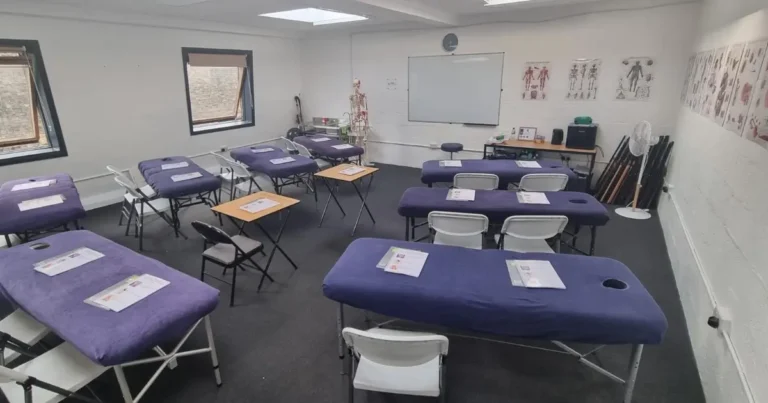
Starting your own massage business in the UK is a natural next step once you’re qualified. Around 86% percent of complementary therapists work for themselves, so you’ll be in good company. Below you’ll find a practical, step-by-step roadmap that takes you from fresh graduate to fully insured professional, ready to earn a living in a clinic room, spa, sports club or even on a cruise ship!
Shortcut to success: Most of our graduates at The School of Natural Therapies pass first time and gain the recognised qualifications insurers require. Explore the ITEC Level 3 Diploma in Sports Massage, ITEC Level 3 Diploma in Massage to get started, or take a look at some more advanced training with our BTEC Level 5 Diploma in Clinical Sports & Remedial Massage.
1. Map Out Your Massage Career Path
Before you write a business plan, decide how you’d like to work:
- Sole trader (mobile or home-based)
Typical set-up costs: Low
Pros: Flexible hours, minimal overheads
Cons: Travel time if mobile and perhaps limited space - Rent a room in a salon or gym
Typical set-up costs: Medium (rent)
Pros: Ready-made footfall
Cons: Rent even on slow days - Spa, hotel or cruise ship employment
Typical set-up costs: None to low
Pros: Guaranteed salary, perks, travel
Cons: Less control over schedule & pricing
Keep this vision in mind as you move through the remaining steps.
2. Get the Right Qualification (and a Brilliant Pass Rate)
Clients, employers, and insurers will all ask about your credentials. A regulated qualification, such as the ITEC Level 3 Diploma in Sports Massage, ITEC Level 3 Diploma in Massage are the industry baseline. Add specialisms (pregnancy massage, oncology massage) to widen your potential client base and day-rate. There’s more reasons to book with The School of Natural Therapies than just our magnificent pass rate – have a read!
3. Draft a Business Plan
Don’t forget to capture the essentials:
- Vision & niche – e.g. “mobile deep-tissue massage for runners in South London”.
- Target market & location – who needs you, and where.
- Revenue goals – sessions per week × price = turnover.
- Start-up budget – couch, linens, oils, room rent, marketing.
- Milestones – qualification date, insurance, first 10 clients, monthly income target.
4. Register Your Business and Stay Legal
- Choose structure (sole trader vs limited company) – As soon as you earn.
- Register for Self Assessment – Before the 5 Oct after your first tax year.
- ICO Data Protection fee (if you store client data) – Immediately through ico.org.uk
- Local authority licence (England & Wales, certain boroughs) – Before treating clients (Check your council’s website)
- First Aid certificate – Recommended for insurance and something we can provide.
5. Arrange Professional Insurance
Most insurers need to see proof of training hours and a recognised syllabus. Once you graduate with us, you’ll be eligible for discounted cover with providers such as the FHT. Policies you’ll need:
- Professional Indemnity & Public Liability.
- Product Liability (if you blend oils).
- Equipment cover (optional but wise for mobile therapists).
6. Price Your Treatments Correctly
A quick formula for an hourly rate that sustains you:
(Target annual personal salary + Annual business costs) ÷ Billable hours per year = Minimum hourly rate
Check local competitors, but don’t under-charge: quality beats bargain-basement pricing and you’ll avoid burnout!
Need benchmarks? See our guide on How Much Do Massage Therapists Earn in the UK? for real-world figures.
7. Market Like a Professional
- Google Business Profile – Free local search visibility to appear on Google Maps.
- Optimised website – Your digital shopfront to be found on the internet and accept bookings.
- Social media (Instagram/TikTok) – Visual proof of expertise and existence. Post mini-tutorials & before/after testimonials.
- Referral partnerships – Warm leads (start networking with physios, gyms & yoga studios).
- CPD & networking events – Stay current and visible, don’t let your training slip, keep on top of your expertise with CPD and short massage courses.
Remember: marketing is not a one-off launch, it’s a weekly habit!
8. Master Your Finances
- Bookkeeping software (QuickBooks for example) keeps HMRC’s Making Tax Digital rules pain-free.
- Set aside 20-25% of each payment for tax and National Insurance.
- Claim legitimate expenses: couch, oils, training courses, travel, professional fees.
9. Invest in Continued Professional Development
CPD isn’t just a tick-box for insurers, it boosts your earning power as you’ll be able to provide niche treatments. Popular add-ons:
- Advanced Deep Tissue Massage for sportier clients.
- Pregnancy & Postnatal Massage taps into a loyal market.
- Oncology Massage opens clinical & charity work.
Have a browse of all of our CPD and Short Massage Courses.
Your Next Step
- Enrol on a recognised massage course – spaces fill quickly, so secure your place to avoid disappointment.
- Graduate and get insured – our high pass rate means you’ll be client-ready fast.
- Launch your business – follow the steps above and start earning as a self-employed massage therapist, spa professional or aboard a luxury cruise!
Ready to begin? Contact our admissions team today and let’s turn your passion for massage into a thriving UK business!